
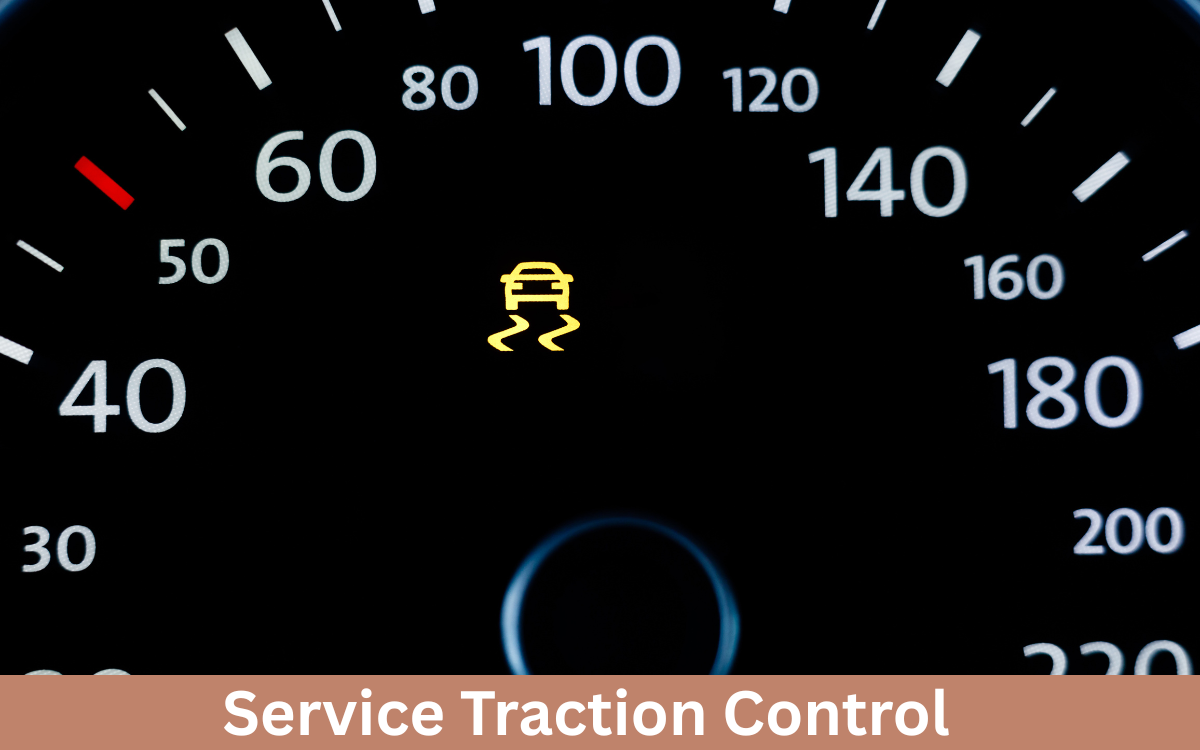

The service traction control warning light indicator signalizes that the vehicle’s Traction Control System (TCS) requires servicing. Traction control is meant to help increase overall safety by decreasing the chances of wheel spin while the vehicle is accelerating (especially during adverse weather conditions such as rain, snow, ice, etc.). Failing to address this warning puts driving stability, vehicle handling, and overall safety at risk. Knowing why this system needs service and how to rectify that is key to greater safety. Smoother driving can result from greater service control.
Regardless of whether you are driving to work every day or simply driving for two days of the week, service traction control warning signals can help prevent driving control and control system breakdowns.
How Does the System Work and What is Traction Control?
Traction Control System Explained
Traction Control is electronic and part of the safety system that control wheel speeds and regulate power to the engine and/or brakes to assist driving control. Which is of high value under the following conditions both positive and negative:
- Road conditions that are slippery and/or wet.
- Road that is uneven and/or covered with gravel.
- Lateral shifts of the vehicle due to acceleration or, sharp turns.
Once the system detects a slip in the control of the vehicle, it takes corrective measures to prevent the vehicle from skidding. Failing to do this can severely increase the risk to safety.
Where The Different Parts of the Traction Control System Are?
Wheel Speed Sensors: Each wheel’s rotation is tracked.
Electronic Control Unit (ECU): This unit is responsible for processing the data from the tokens and deciding what actions/interventions to make.
Brake Actuators: This component is responsible for applying the braked force that gets distributed to specific wheels.
Throttle Control: This unit is responsible for controlling the amount of power that is sent to the wheels to eliminate excessive wheel slip.
The functioning of every part is critical to the safety of the car and all of its occupants.
Reasons for the “Service Traction Control” Warning
Faulty Wheel Speed Sensors
The warning light gets triggered when these components become dirty, damaged, or malfunction, resulting in incorrect signals to the ECU.
Problems with the Anti-Lock Braking System
Because traction control is designed to co-work with the ABS, any malfunctioning of the ABS will cascade to the TCS and will activate the warning light.
Dirty or Low Brake Fluid
An increase in the brake fluid problems would likely lower traction control’s efficiency.
Damaged Wires and Connectors
The system is not able to work properly because of missing or corroded wires.
Problems with the ECU
A faulty unit in hardware or software of the ECU is what causes the “service traction control” message.
The first step to resolution is knowing the root of the problem.
How to Address Traction Control Issues?
Check the Dashboard Warning
- Look at the dashboard warning signs and confirm if the “service traction control“ is on and is it steady.
- If the warning is steady on the dashboard there is likely a minor issue but if it is flashing it may require more immediate attentions.
Inspect Wheel Sensors
- Look over sensors to see if they have any dirt or chunks of debris on them. Check if they have any type of damage.
- If sensors are dirty, clean them. If sensors are damaged replace them.
Verify brake system health
- How much brake fluid is in the system and check the brake fluid to see if it is dirty.
- Look at the state of the brake pads and the rest of the brake system such as the rotors.
Scan the ECU For Error Codes
- Get an issue northing OBD-II scanner to find out if there are specific problems.
- Take documents and recommendations from the manufacturer to solve the problems.
Seek Professional Help
- Certified mechanics can preform the diagnoses for complicated issues.
- Make sure that the TCS is correctly adjusted and that it is in full working condition.
- Licensing and certification are required to make sure that the work is to standard and that the vehicle.
Tips for Maintaining Traction Control System
Regular Vehicle Maintenance
- You must ensure that tires are properly inflated
- Replace tires that are too worn to ensure good traction
- Set and follow a routine schedule for brake inspections
Clean Sensors and Components
- Every so often, do a sensor cleaning to avoid false alerts
- Worn or corroded wires can cause or worsen the issues
Monitor Driving Conditions
- Avoid scenarios that will cause excessive wheel spin
- Slippery surfaces can cause excessive stress on the TCS, so drive carefully
As with any other part of a vehicle, the traction control system will function best when the system is maintained, and driving conditions are organized.
Why Ignoring the Service Traction Control Warning is Risky?
Ignoring these consequences will add to the bottom line.
Less vehicle stability
Braking and control performance will worsen, increasing issues
Tire and brake systems will wear down quickly
If the Electronics for the vehicle have issues, so will the rest of the vehicle.
Long-term vehicle reliability is at stake
When to Seek Immediate Assistance?
If the TCS light blinks during driving
When traction or braking performance feels abnormal
After replacing tires or brakes and the light persists
If multiple dashboard warnings appear simultaneously
Professional vehicle systems are engineered to prevent accidents and expensive repair costs.
FAQs
What does the ‘Service Traction Control’ Light Mean?
This light indicates you should check the traction control system, as it is likely not working properly.
Can I drive with the traction Control Warning on?
You should drive with caution, however you should address the service warning at your earliest convenience due to safety concerns.
How Much Does it Cost to Repair Traction control Issues?
Costs for repairs can vary greatly depending on the problems. Issues can be as simple and inexpensive as sensor replacement, which ranges from roughly $50-200. Repairing an ECU can cost around $200-500 or more.
Does Tire Condition Affect Traction Control?
Yes. The system can become ineffective if you have mismatched or excessively worn tires.
Am I able to reset the traction control system on my own?
Some minor resets can be accomplished by switching the vehicle off and on; still, professional diagnostic services are suggested for ongoing warning notifications.